
On the afternoon of 26 October, the second Thematic Dialogue of the Belt and Road Green Innovation Conference 2026 took place in Hong Kong. Themed “Jointly Advancing Green and Low-Carbon Technology Innovation and Industrial Synergy”, the dialogue was moderated by Mr. Zhang Zhifeng, Director-General of the Foreign Environmental Cooperation Center (FECO), Ministry of Ecology and Environment of China and Vice President of the Governing Board of the International Green Development Coalition for the Belt and Road Regions (IGDC). Leveraging the bridging role of the Green and Low-carbon Expert Network (GLEN), this dialogue brought together international organisations such as the UNEP Climate Technology Centre and Network (CTCN); environmental authorities from Belt and Road partner countries, including the Ministry of Environment of Cambodia and Ministry of Environment and Climate Change of Mongolia; industry bodies such as the China Association of Circular Economy; and three leading Chinese and international academicians whose expertise spans environmental governance, materials science and energy technology. More than 200 representatives from government, international organisations, financial institutions, leading companies, universities and think tanks attended to explore new avenues for green technology cooperation.
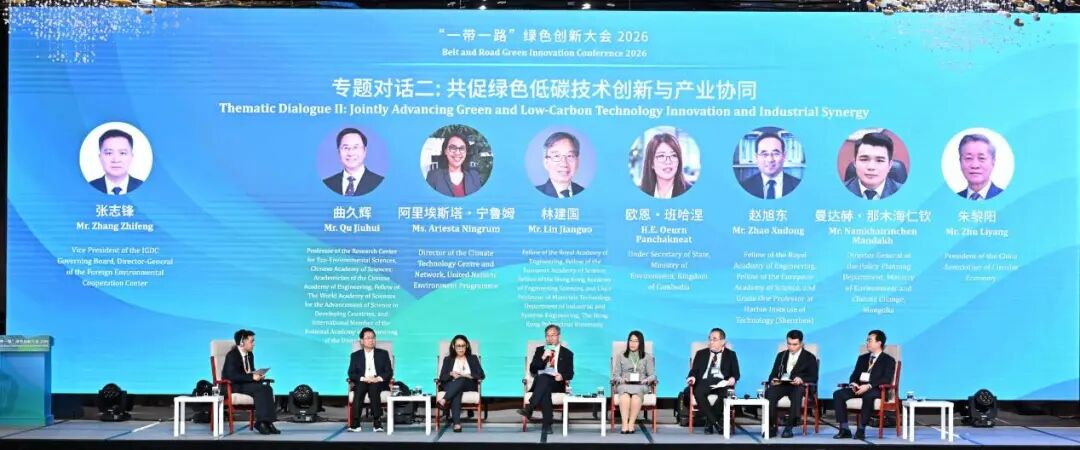
▲Figure 1: The Thematic Dialogue under way
GLEN was launched at the initiative of Chinese President Xi Jinping during the Third Belt and Road Forum for International Cooperation in 2023. It aims to match technology supply with demand, facilitate technology transfer and support the green transition, providing a three-in-one platform that brings together proven technologies, genuine expertise and real needs. Its experts now cover key fields such as environmental governance, climate change, energy transition, green finance and international trade, and come from a wide range of countries, including China, the United States, Mongolia, Brazil, Australia, Pakistan and Indonesia. The network is actively working to connect China’s mature green and low-carbon technologies with the practical needs of developing countries.
Opening the dialogue, Mr. Zhang Zhifeng noted that GLEN was created in response to an increasingly urgent global need for green technology at a time when the North–South technology gap remains wide. Drawing on GLEN’s role as a bridge, the dialogue covered international trends and emerging needs in green and low-carbon technology cooperation, the main bottlenecks in technology transfer, South–South transfer models that can be replicated at scale, priority areas for Chinese green technologies going global, and the scope for cooperation with the Global South. Discussions spanned key fields including water treatment and recycling, solid waste valorisation and the circular economy, lightweight materials and green manufacturing, and renewable energy and energy efficiency. The aim was to align China’s technologies, standards, talent and capital with the development priorities of Global South countries, so that green technologies can genuinely fit local contexts, deliver results on the ground and last.
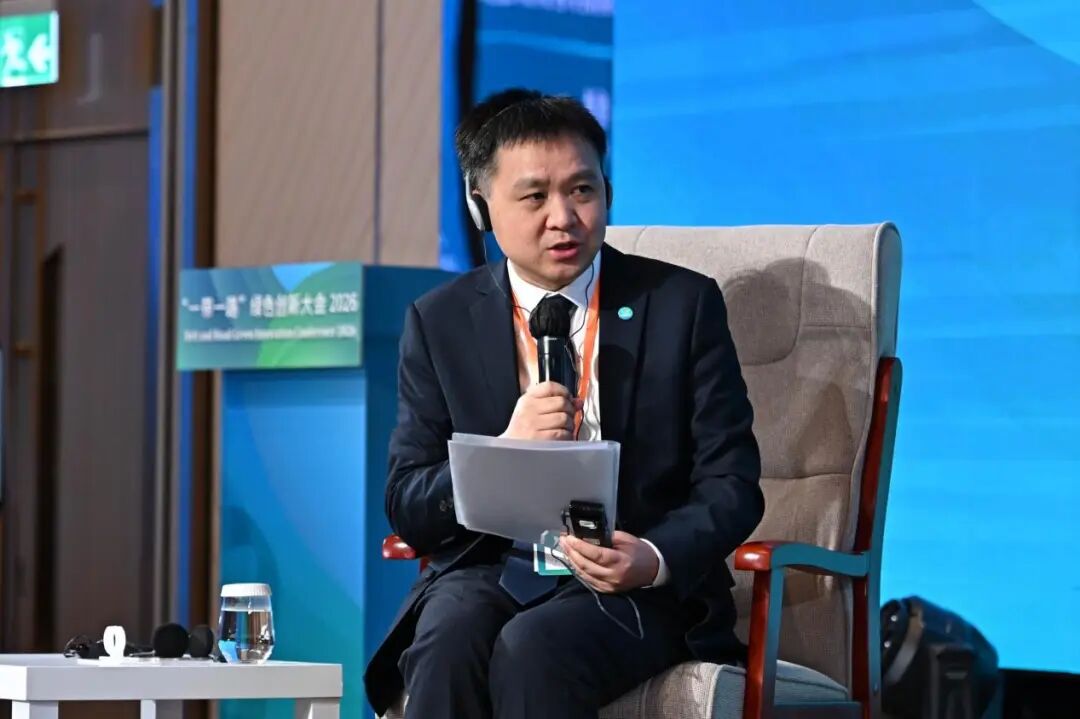
▲Figure 2: Mr. Zhang Zhifeng, Director-General of the Foreign Environmental Cooperation Center (FECO), MEE and Vice President of the Governing Board of IGDC, moderates the dialogue
Real Needs: What Does the Global South Actually Need?
Ms. Ariesta Ningrum, Director of the Climate Technology Centre and Network (CTCN) of the United Nations Environment Programme, identified three trends in the environmental and climate technology needs of Global South countries: solutions increasingly address both mitigation and adaptation; technology transfer is no longer simply about delivering equipment and know-how; and South–South cooperation is becoming a practical way to narrow the technology gap. What these countries need today, she said, is not a single stand-alone technology but integrated solutions that align with local policies and international standards, equip local institutions to run them over the long term, and come with affordable finance. Surveys show that demand is most concentrated in waste management and the circular economy, water, and early warning systems. She described CTCN and GLEN as important platforms for matching green technologies with needs and getting projects off the ground. With shared goals and complementary strengths, the two have great potential to work together: GLEN brings China’s experience and expertise in low-carbon solutions, while CTCN, through its country-driven approach, identifies the technology needs of developing countries and helps them access the right solutions. Going forward, she called for closer coordination among such platforms to maximise synergies.
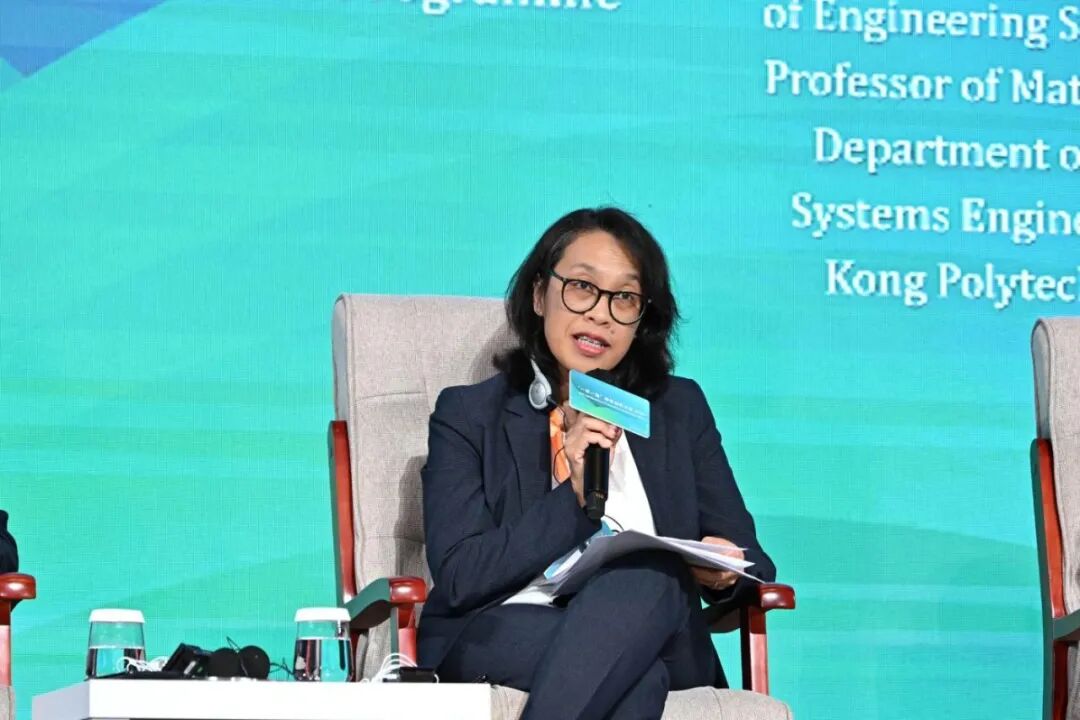
▲Figure 3: Ms. Ariesta Ningrum, Director of the Climate Technology Centre and Network, United Nations Environment Programme, delivers her remarks
Ms. Oeurn Panchakneat, Under Secretary of State of the Ministry of Environment, Cambodia, said that Cambodia is advancing the circular economy through the three pillars of the Ministry’s circular economy strategy, the Environment and Natural Resources Code, and the legal framework for its NDC 3.0. Noting the solid foundation of Cambodia–China cooperation on ecological and environmental protection, she looked forward to stronger collaboration in strategic alignment, hands-on training and green finance. Such cooperation, she said, should ensure that technologies are adapted to local conditions, affordable and backed by strong expert teams, helping Cambodia make the fundamental shift from technology transfer to technology absorption and build integrated solutions that truly meet its own development needs.
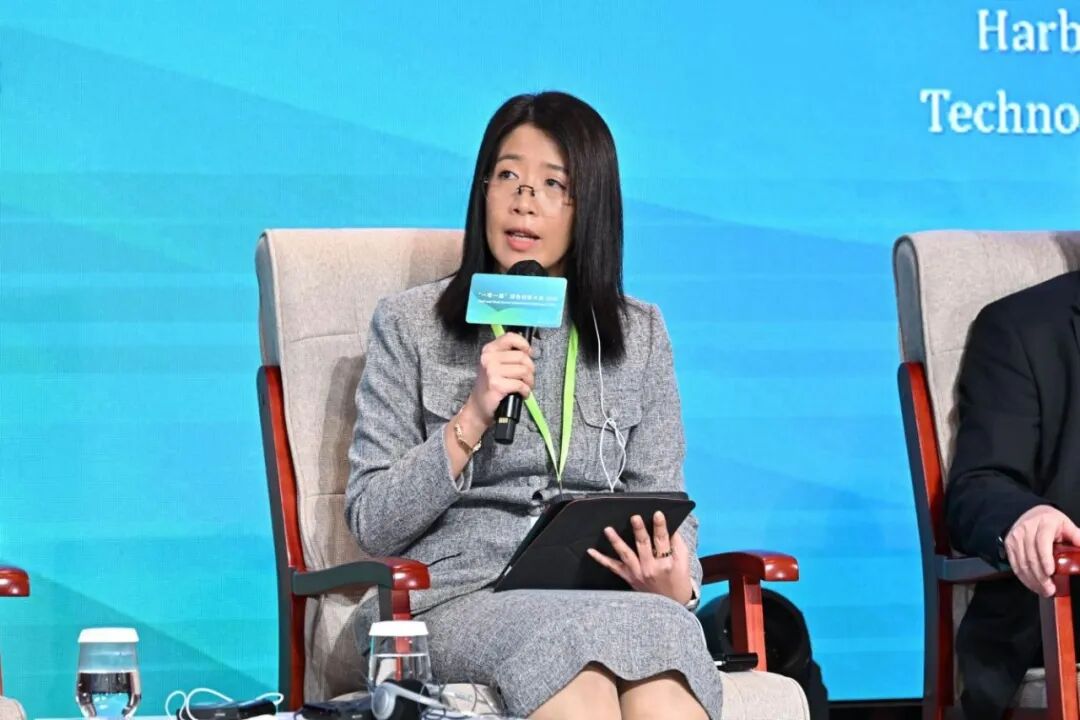
▲Figure 4: Ms. Oeurn Panchakneat, Under Secretary of State, Ministry of Environment of the Kingdom of Cambodia, delivers her remarks
Mr. Namkhairinchen Mandakh, Director General of the Policy Planning Department at the Ministry of Environment and Climate Change, Mongolia, said that Mongolia’s most pressing need in its green transition is access to green technologies that are affordable, reliable and suited to local conditions. Demand is particularly strong in environmental infrastructure, green finance and investment, public participation and sustainable consumption, and Mongolia is attracting green investment under the green taxonomy established by its Law on Climate Change. He hoped to see technology transfer with China expand in waste management, renewable energy, climate adaptation and water management, alongside more training for technical experts and young scientists and closer collaboration between research institutions and businesses, so that the two countries can jointly develop innovative solutions to water scarcity, desertification and waste.
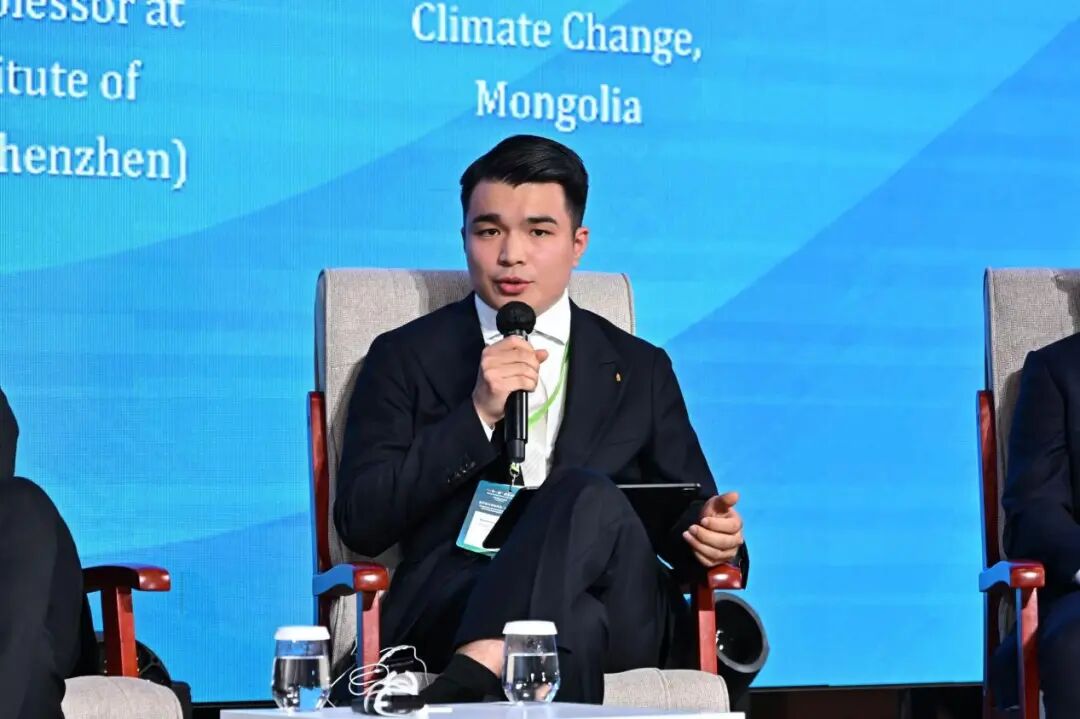
▲Figure 5: Mr. Namkhairinchen Mandakh, Director General of the Policy Planning Department, Ministry of Environment and Climate Change of Mongolia, delivers his remarks
Proven Technologies: How Can China’s Strengths Serve the Global South?
Mr. Qu Jiuhui, Professor of the Research Center for Eco-Environmental Sciences, Chinese Academy of Sciences; Academician of the Chinese Academy of Engineering; Fellow of The World Academy of Sciences for the Advancement of Science in Developing Countries; and International Member of the National Academy of Engineering of the United States, used water treatment as an example to illustrate China’s approach to cutting pollution and carbon emissions in tandem. Water treatment, he noted, is not only an important area for reducing emissions but can also become a key hub for resource recycling and energy recovery. The key to technology transfer is making sure the technology actually works where it is used. Projects with Sri Lanka and Nepal show that water treatment is shifting from energy-intensive pollution control to an integrated water–energy–resource cycle, and from isolated technological breakthroughs to system integration and large-scale deployment. The resulting green and low-carbon system solutions can be replicated and scaled up, offering useful lessons for Belt and Road partner countries on water security and energy and resource cooperation, and contributing to green and low-carbon development worldwide.
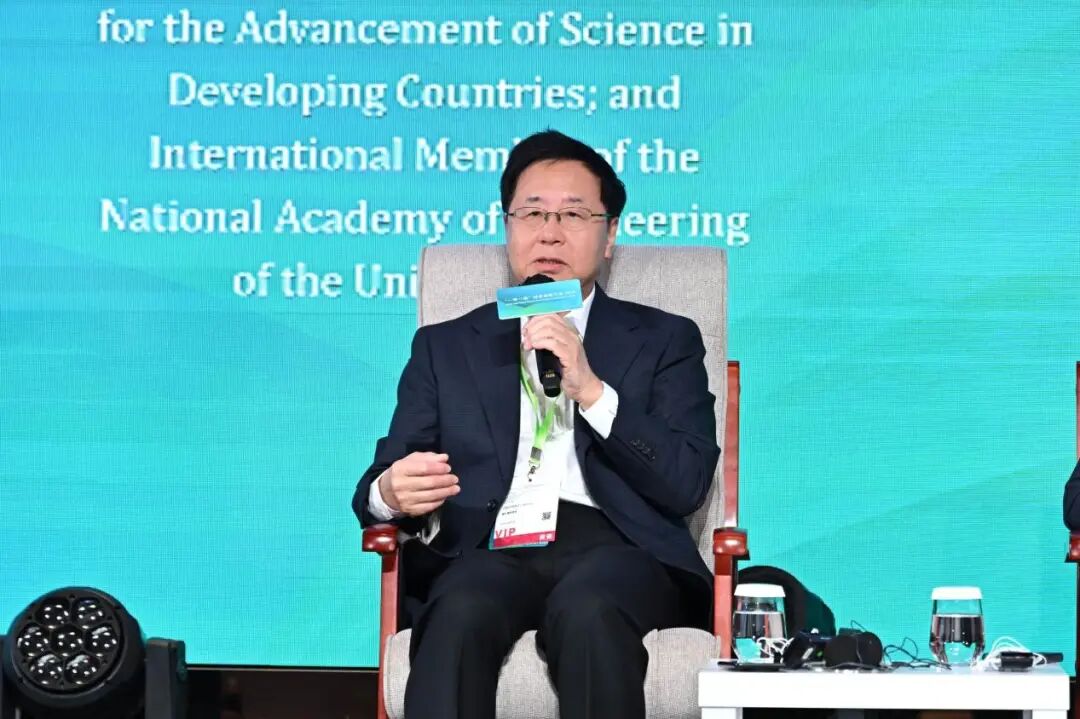
▲Figure 6: Mr. Qu Jiuhui, Professor of the Research Center for Eco-Environmental Sciences, Chinese Academy of Sciences; Academician of the Chinese Academy of Engineering; Fellow of The World Academy of Sciences for the Advancement of Science in Developing Countries; and International Member of the National Academy of Engineering of the United States, delivers his remarks
Mr. Lin Jianguo, Fellow of the Royal Academy of Engineering, Fellow of the European Academy of Science, Fellow of the Hong Kong Academy of Engineering Sciences, and Chair Professor of Materials Technology, Department of Industrial and Systems Engineering, The Hong Kong Polytechnic University, said that amid the global energy crisis, using less material and decarbonising materials are key levers for building a green, low-carbon circular economy. Lightweight materials are a natural place to start international cooperation on technology transfer: the core breakthroughs have been made, and industrial-scale production is now under way. The next step could be to explore applications in building “lightweight cities”, from lighter transport and lower carbon emissions and energy use to higher recycling rates and maximum reuse of urban infrastructure. All of these could serve as models for GLEN as it brings green technologies to other countries.
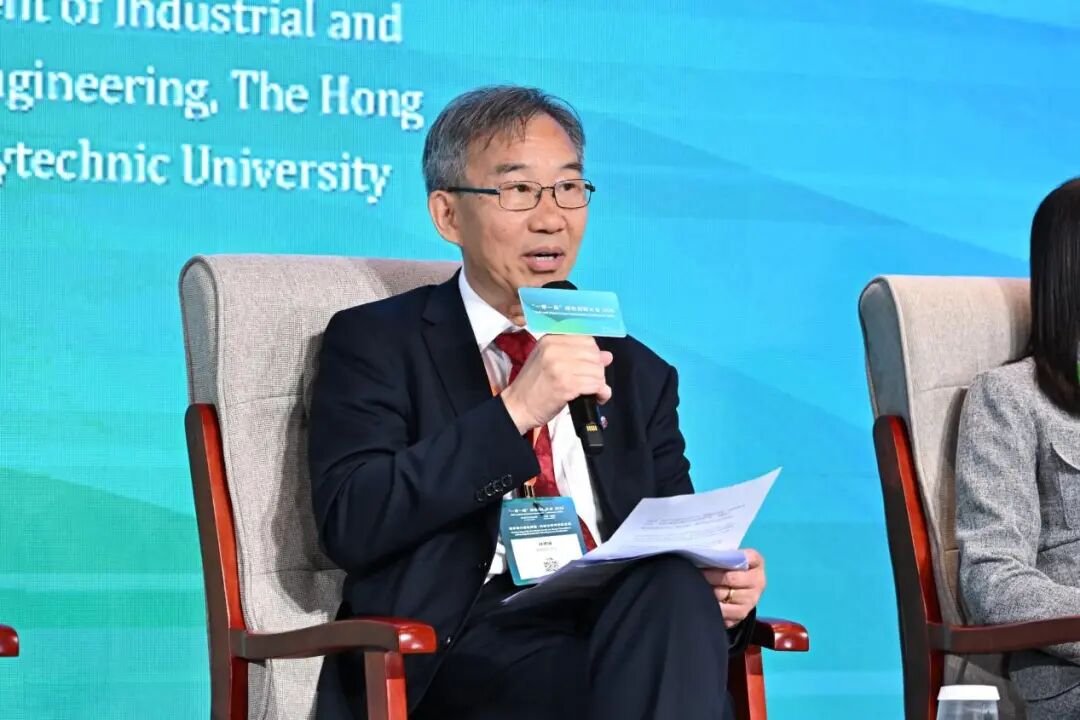
▲Figure 7: Mr. Lin Jianguo, Fellow of the Royal Academy of Engineering, Fellow of the European Academy of Science, Fellow of the Hong Kong Academy of Engineering Sciences, and Chair Professor of Materials Technology, Department of Industrial and Systems Engineering, The Hong Kong Polytechnic University, delivers his remarks
Mr. Zhao Xudong, Fellow of the Royal Academy of Engineering, Fellow of the European Academy of Science, and Grade One Professor at Harbin Institute of Technology (Shenzhen), focused on “PV-plus” applications and showcased carbon-negative eco-photovoltaic technology. China has strong manufacturing capacity and deep technological know-how in new energy, he said, and deepening international cooperation to take its green technologies global is the natural way forward. Building on zero-carbon power generation, carbon-negative eco-PV adds functions such as carbon capture and conversion, water treatment and biomass production, linking multiple industries and broadening both its overall benefits and its range of applications. For the Global South, priority should go to deploying integrated solutions such as carbon-negative eco-PV. The key lies not just in exporting individual technologies, but in adapting them to local settings, aligning standards and building capacity – which in turn creates more room for GLEN to respond to the green technology needs of the Global South.
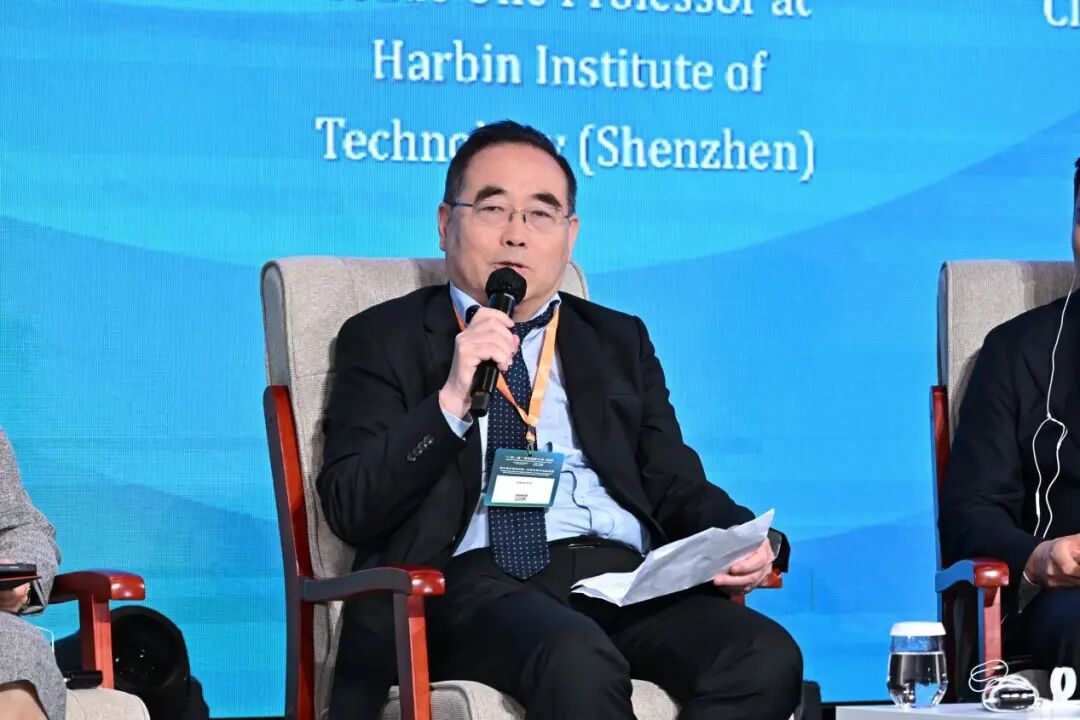
▲Figure 8: Mr. Zhao Xudong, Fellow of the Royal Academy of Engineering, Fellow of the European Academy of Science, and Grade One Professor at Harbin Institute of Technology (Shenzhen), delivers his remarks
On-the-Ground Matching: How Can Technologies Take Root and Deliver?
Mr. Shen Guicang, Senior Engineer at the China Association of Circular Economy, said that China has put in place a largely complete circular economy system that can serve as a reference for green cooperation under the Belt and Road Initiative. He stressed that green and low-carbon industries going global should move from stand-alone projects to localised cooperation built around industrial parks. The heart of China’s experience lies not in scale itself, but in coordination across the entire chain, from collection and sorting to processing, remanufacturing and reuse, reflecting the principle that a circular economy must be both circular and economically viable. Partner countries are showing growing demand for building circular economy industries, recycling resources and aligning standards, especially when it comes to recovering end-of-life products from China’s “new three” industries: electric vehicles, lithium-ion batteries and solar PV. China can share its experience in these areas through technology transfer, capacity building, project cooperation and joint standard-setting.
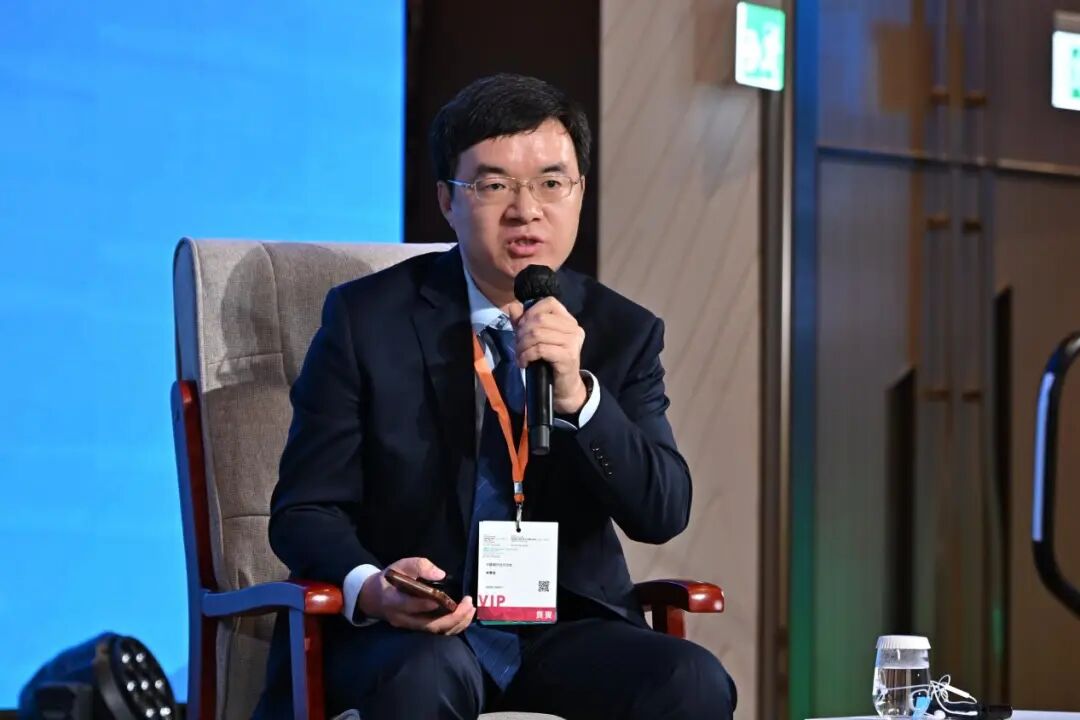
▲Figure 9: Mr. Shen Guicang, Senior Engineer at the China Association of Circular Economy, delivers his remarks
The experts agreed that whether a technology truly takes hold depends on three things working together: aligned standards, capacity building and localisation. Successful South–South technology cooperation does not mean copying one country’s model wholesale; it means sharing knowledge, adapting to local needs, and creating the financial and institutional conditions needed for scale-up and long-term sustainability. Speakers called for international standards and financing mechanisms to be put in place as soon as possible to support the large-scale application of innovative technologies.
A Stronger Platform: Growing the Expert Network and Acting on a Needs List
Mr. Zhang Zhifeng summed up the dialogue in three points.
First, the technology needs of the Global South are changing profoundly. Countries are no longer looking simply to import individual technologies; they now want integrated packages that combine technology, standards, finance and the capacity to operate locally.
Second, China has built up technological strengths in several key areas. In fields such as the green transformation of industry, circular industrial systems, water treatment and recycling, solid waste utilisation and energy efficiency, it has accumulated mature technologies and industrial experience with great potential to be replicated, scaled up and put into practice across the Global South.
Third, GLEN will continue to serve as a key platform. Looking ahead, it will gather green and low-carbon technology needs from around the world, compile them into a needs list, and publish an annual report on the “Top 10 Green and Low-carbon Technology Needs”, while stepping up experience sharing, technology transfer and capacity building. GLEN also welcomes more experts and professionals in green and low-carbon fields to join the network and contribute through the IGDC platform, so that technology cooperation can do more to support the global green and low-carbon transition.
The participants reached a consensus that China’s practical experience in green and low-carbon technologies and industries offers a valuable reference for Global South countries pursuing their own green transition. Going forward, all parties concerned could jointly build platforms for green and low-carbon technology innovation and international cooperation, make fuller use of GLEN as a bridge and a hub, and bring ideas, technologies, standards and talent together, so that the right technologies reach the countries that need them. The goal is to teach people to fish, not just hand them fish – and, together, to drive the global green and low-carbon transition and sustainable development forward.
Copyright © 2020 BRI International Green Development Coalition. All rights reserved.
Address: No.5 Houyingfang Hutong, Xicheng District, Beijing 100035, China
Postcode: 100035
Fax: (86)10-82200539
E-mail: secretariat@brigc.net


