
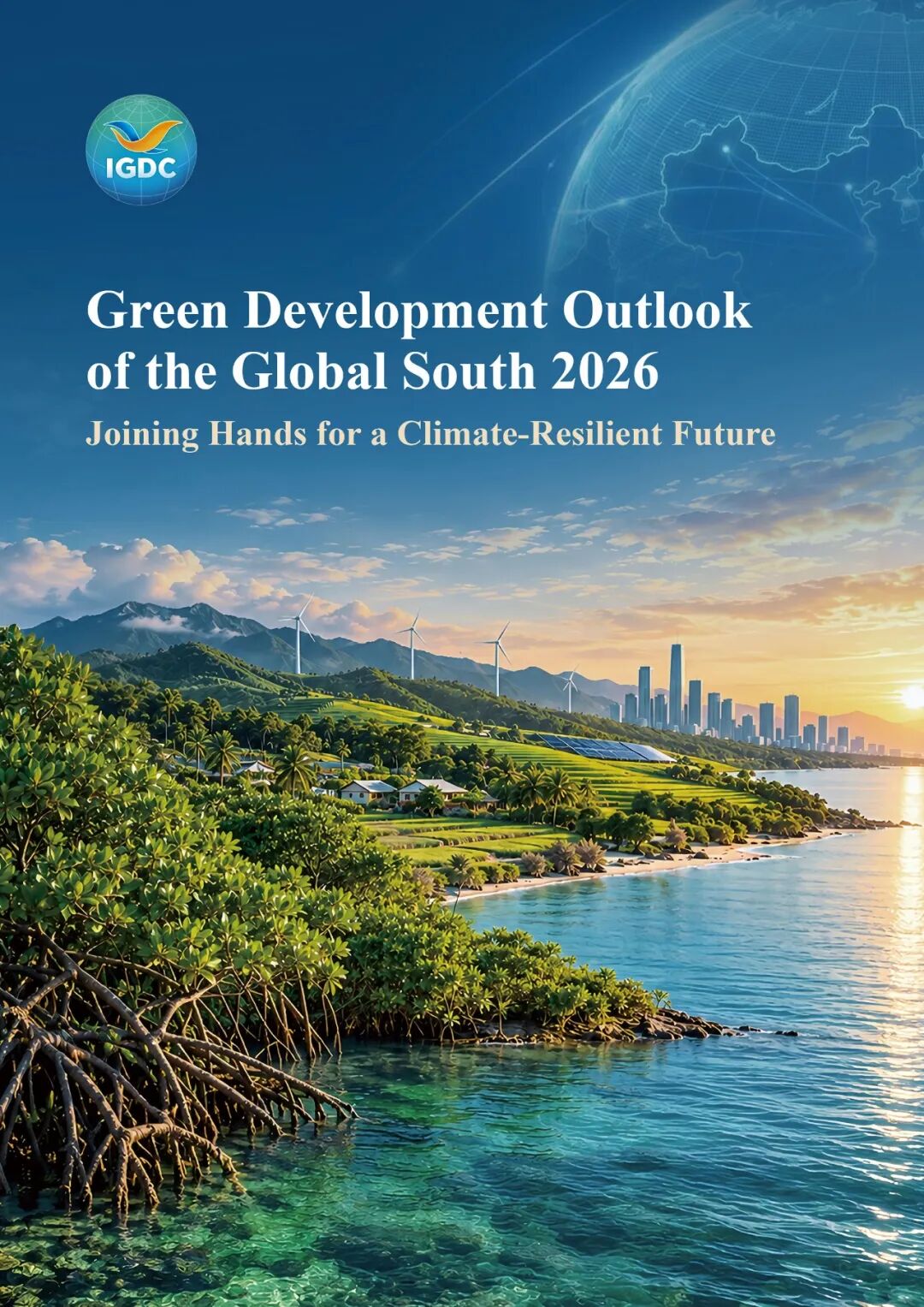
On October 26, the International Green Development Coalition for the Belt and Road Regions (IGDC) released its research report, Green Development Outlook of the Global South 2026: Joining Hands for a Climate-Resilient Future, at the Belt and Road Green Innovation Conference 2026 in Hong Kong. Focusing on climate adaptation in the Global South, the report examines the global green development landscape and systematically analyzes climate risks and the challenges they pose to development and security across the Global South. It provides a comprehensive assessment of climate adaptation conditions and priority areas across the region’s major geographical groupings. On this basis, the report calls on developed countries to support climate adaptation efforts in the Global South and offers recommendations on pathways for strengthening climate resilience in developing countries.
The report comes at a time when the 17th Conference of the Parties to the Convention on Biological Diversity (CBD COP17) is conducting the first global review of implementation of the Kunming-Montreal Global Biodiversity Framework, while the 31st Conference of the Parties to the United Nations Framework Convention on Climate Change (UNFCCC COP31) is set to focus on delivering commitments on climate finance and a just transition. Developed by IGDC and its partners, Green Development Outlook of the Global South 2026 provides research-based insights to support collective efforts across the Global South to build climate resilience and foster a new model of climate resilience governance involving coordinated action by multiple stakeholders.
Climate Adaptation: An Urgent Imperative for the Survival and Development of the Global South
International research shows that the global mean near-surface temperature in 2024 was 1.55°C above pre-industrial levels. Between 1995 and 2024, more than 9,700 extreme weather events occurred worldwide, claiming over 832,000 lives and causing US$4.5 trillion in direct economic losses. More than 90% of the fatalities occurred in the Global South.
The report identifies climate risks as a development constraint that the Global South must confront today, with direct implications for the right to development, equity and improvements in people's livelihoods. It argues that climate vulnerability in the Global South is not determined solely by physical and geographical conditions, but results from the combined effects of constraints associated with development stages, weak infrastructure and limited governance capacity. The approach of “mitigation first, adaptation later” is no longer viable in practice. Building climate resilience is not only necessary to address climate risks, but also essential to safeguarding development gains and strengthening the capacity for sustainable development. Adaptation action cannot be delayed: early planning and investment can deliver long-term, comprehensive benefits at a relatively low upfront cost.
Multiple Constraints on Climate Adaptation in the Global South
According to the United Nations Environment Programme’s Adaptation Gap Report 2025, developing countries will require US$310–365 billion annually for climate adaptation by 2035, while international public adaptation finance flows to developing countries amounted to only about US$26 billion in 2023—just one-twelfth to one-fourteenth of the estimated annual need. In 2024, global climate finance exceeded US$2 trillion for the first time, yet only around US$64 billion, or approximately 3%, went toward adaptation.
The report argues that the climate adaptation finance goal established at COP30 is insufficient to meet actual needs and that developed countries should do more to fulfill their relevant obligations. The adaptation finance gap is not simply a financing problem; it reflects the combined effects of responsibility-sharing, financing rules and differences in countries’ stages of development within the global climate governance system.
The Global South: Strengthening Cooperation and Tailoring Climate Adaptation Strategies
Taking geographical proximity and climate risk profiles into account, the report groups countries of the Global South into several regions and systematically assesses their development characteristics, climate trends, adaptation progress and key constraints. It identifies water security; food security and agricultural resilience; infrastructure and urban resilience; ecosystem protection and nature-based solutions; climate monitoring, early warning and information services; and public health and social protection as priority areas for strengthening climate adaptation across the Global South.
The report calls on developed countries to provide further support to the Global South in financing, technology and capacity-building. At the same time, countries of the Global South should tailor their approaches to their respective stages of development, practical needs and fiscal capacities, while deepening regional coordination and South-South cooperation. These efforts can help foster a new model of climate resilience governance involving coordinated action by multiple stakeholders.
IGDC is a platform for green development cooperation under the Belt and Road Initiative. It currently has 64 member organizations and more than 190 Chinese and international partners from nearly 50 countries, including climate and environmental authorities from 26 Belt and Road partner countries. IGDC has established three major platforms: the Green Investment and Finance Partnership (GIFP), the Green and Low-Carbon Expert Network, and the Belt and Road Big Data Service Platform.
IGDC will continue to work with partners to deepen practical cooperation, conduct joint research and publish further editions of the Green Development Outlook of the Global South series. It will also promote synergies among green finance, technology and industry, contributing Chinese insights and expertise to the global green and low-carbon transition, particularly in the Global South.
Copyright © 2020 BRI International Green Development Coalition. All rights reserved.
Address: No.5 Houyingfang Hutong, Xicheng District, Beijing 100035, China
Postcode: 100035
Fax: (86)10-82200539
E-mail: secretariat@brigc.net


