
On 5 November, the Belt and Road Exchange Conference on Green and Low-Carbon Technology Innovation was held in Beijing. Hosted by the International Green Development Coalition for the Belt and Road Regions (IGDC) with support from the Beijing International Science and Technology Exchange Center, the conference brought together over 100 representatives, including government officials and technical experts from 13 Belt and Road partner countries such as Azerbaijan, Fiji, Cabo Verde and Uzbekistan, as well as representatives of Chinese government agencies, research institutions and companies. This conference is a concrete action to implement the outcome of the Third Belt and Road Forum for International Cooperation regarding the "Building the Green and Low-carbon Expert Network" (GLEN), and an important exchange and matchmaking event under the GLEN framework. The network is being vigorously advanced by the IGDC with the aim of creating a multilateral cooperation platform to promote technological and policy innovation for green development. Under the theme "Green and Low-Carbon Technology Innovation Powering the Green Silk Road", participants exchanged views on a question that ran through the entire day, from the opening remarks to the roundtable dialogues: how can green and low-carbon innovations move beyond the showcase and become real projects on the ground in partner countries?
Building Consensus: Green at the Core, Innovation as the Key
"Green and low-carbon technology innovation is vital to tackling climate change and advancing the energy transition. It also gives countries a powerful lever to open up new areas of cooperation and new sources of growth," stated Yang Changyong, Deputy Director General of the Belt and Road Initiative Promotion Center of the National Development and Reform Commission (NDRC), in his opening remarks. He noted that Chinese companies have engaged in practical cooperation with more than 100 countries in solar, wind, hydro and thermal energy, and that green concepts and technologies are built into many of these projects. Stressing that the international energy security situation remains challenging, he added: "Renewable energy can be sourced locally, and with energy storage, smart grids and energy-efficiency technologies advancing rapidly, countries now have a practical path to optimise their energy mix and make their energy systems more resilient."
Azerbaijan was among the first countries to take part in Belt and Road cooperation. In his remarks, Ulfat Rafael Machanov, Deputy Director of the Climate Diplomacy Department at the Ministry of Foreign Affairs of Azerbaijan, noted his country aims to generate 30% of its electricity from renewable sources by 2030, with a technical renewable energy potential of 135 GW onshore and 157 GW offshore. Solar power plants and other projects built by Chinese companies are already operating in Azerbaijan, he explained, and a Chinese photovoltaic company is building a 23-hectare solar manufacturing complex in a free economic zone, whose products will serve markets around the world and bring clean power to more places.
Chen Gang, Secretary General of IGDC, the host of the conference, stated that the green transition is a long-term, systemic undertaking. It requires a genuine understanding of needs, as well as concerted efforts from experts and across technology, standards and finance. Drawing on cooperation platforms such as the Green and Low-carbon Expert Network (GLEN), the Coalition stands ready to provide end-to-end support, from policy dialogue and technology matchmaking to financing, and to act as a "translator" and "connector" for all parties. By matching needs with solutions, technologies with capital and projects with partners, the Coalition aims to help partner countries find green technologies that are fit for purpose and affordable, along with sound, integrated solutions, so that more cooperation projects can take root and deliver lasting results.
As one of the eight actions proposed by China to support high-quality Belt and Road cooperation and promote green development and an important platform for technological innovation and exchange, GLEN brings together leading domestic and international experts in green and low-carbon development related areas to provide targeted policy recommendations and technical solutions to address the specific challenges and practical needs faced by Global South countries in their green transitions.
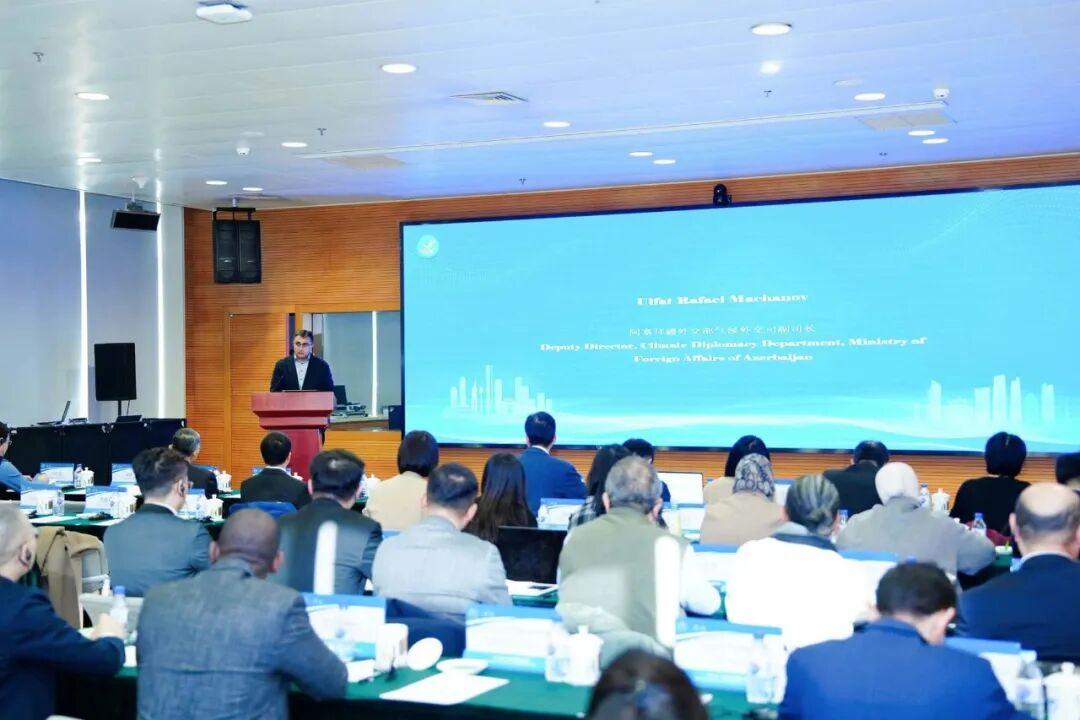
▲Figure 1 Opening Ceremony
Solutions on Offer: China's Growing "Toolbox"
In the invited speech session, five speakers shared how green and low-carbon innovations are being applied in practice, covering water governance, finance, carbon footprints and the experience of central state-owned enterprises, and put forward practical proposals for deepening international cooperation.
Wei Yuansong, Director of the Laboratory of Water Pollution Control Technology at the Research Center for Eco-Environmental Sciences, Chinese Academy of Sciences (CAS), and President of the Beijing Society of Ecological Restoration, described a highly productive partnership with Sri Lanka. It began with a training programme in 2012, led to the first cooperation framework agreement in 2015, and in 2020 resulted in the completion and handover of the China-Sri Lanka Joint Research and Demonstration Center for Water Technology. The project has built four drinking water demonstration facilities, providing safe drinking water to more than 5,000 local villagers and over 1,300 primary school pupils, and has trained more than 100 technical professionals — a vivid illustration of "how an idea goes from concept to reality".
Ye Yanfei, former Level-I Inspector (Director-General level) of the Department of Policy Research at the National Financial Regulatory Administration and Member of GLEN, noted that China has ample capital and relatively low RMB financing costs. He suggested using instruments such as RMB bonds, guarantees and financial leasing to channel more low-interest RMB funds into green projects in partner countries, which "can boost returns for Chinese financial institutions while also helping developing countries grow". The key, he added, lies in sound project preparation, credit enhancement and alignment of rules, so that more projects that are bankable and ready to operate can be effectively matched with RMB financing.
"Technology is the engine of the green transition, and finance is the fuel," noted Sanjaasuren Oyun, Senior Adviser on Partnerships at the Green Climate Fund, former Minister of Environment and Green Development and former Minister of Foreign Affairs of Mongolia, and Member of GLEN, going straight to the heart of the matter. China, she emphasized, has become a source of hope for the global green transition. "Good technologies need to become good products, and good products need to become industries that run sustainably and benefit many stakeholders." She expressed hope that Chinese capital and technology would co-finance projects with multilateral institutions, "turning the Green Silk Road into a highway for climate solutions".
Approaching the topic from the angle of carbon footprints, Yu Jie, Director of the China Quality Certification Centre, Dean of its Dual Carbon Research Institute, and Member of GLEN, said China is speeding up the development of its carbon footprint management system and plans to build 100 zero-carbon parks during the 15th Five-Year Plan period (2026-2030). She outlined four pathways — low-carbon energy, process innovation, the circular economy and digital empowerment — and described "green power, recycling, eco-design and energy efficiency improvements" as offering "the best value for money".
Liao Yuan, Chairman of CECEP Eco-Product Development Research Center Co., Ltd., stressed that no green technology can be deployed abroad simply by copying solutions from China; it must fit local resources and policy environments. Building the Green Silk Road requires finance, technology and compliance to work together across the entire chain, and "compliance is the ballast that keeps green investment steady as it goes global".
The session on green technologies in China opened the "toolbox" further. Yu Xiang, Deputy Director of the International Cooperation Department of the Renewable Energy Professional Committee, China Energy Research Society, presented research on "PV+" applications; Shen Guicang, Deputy Director of the Policy Research Office of the China Association of Circular Economy, shared China's experience in developing the circular economy; and Liu An, Deputy Director of the Demonstration and Promotion Division of the Beijing Energy Conservation and Environmental Protection Center, highlighted what Beijing has achieved in its green transition. These experiences showed participants practical ways in which Chinese green technologies can be put into use and become the basis for cooperation.
Matching Needs: The Global South and China Meet Halfway
The moderator opened the roundtable dialogues by getting straight to the point: "We're not here for a technical discussion. We're here to talk about cooperation." Representatives of partner countries then set out their needs.
José Maria Ramos da Veiga, Director General of Planning, Budget and Management at the Ministry of Environment, Climate Action and Energy of Cabo Verde, noted that as a water-scarce island nation, Cabo Verde faces a significant funding gap by 2030 in energy, water, and waste sectors, and is actively seeking technology and financing partners to implement renewable energy projects.
Nina Elizabeth Masiverata Sikiti, Manager of the Relocation Unit at the Ministry of Rural and Maritime Development and Disaster Management of Fiji, pointed out that Fijian communities are scattered and heavily threatened by climate disasters. She looked forward to more "small and beautiful" community cooperation with China, aiming to deepen collaboration in rural electrification, solar water pumps, and community relocation.
Komronbek Normurod ugli Khoshimov, Chief Specialist at the Project Office for Development and Implementation of Investment Projects in Ecology of Uzbekistan, stated that his country has clear technical needs in solid waste management, wastewater treatment, and air pollution control, and highlighted projects in circular economy, water resources management and pollution control, as well as land restoration and climate resilience.
Nguyen Thi Hao, Deputy Director of Green Economy and Innovation at the University of Economics and Business, Vietnam National University, Hanoi, hoped to deepen technical and financial cooperation in three priority areas: the power system, export sector, and agriculture, focusing on smart grids, battery storage, product carbon footprints and MRV tools, low-carbon rice cultivation, and irrigation training.
Aditia Pramusakti, an analyst at the Institute for Essential Services Reform (IESR) of Indonesia, introduced that Indonesia is advancing a 100 GW solar plan, requiring solar modules, battery storage, microgrid controls, and related investments, and looked forward to cooperation in carbon markets, blended finance, and localized manufacturing.
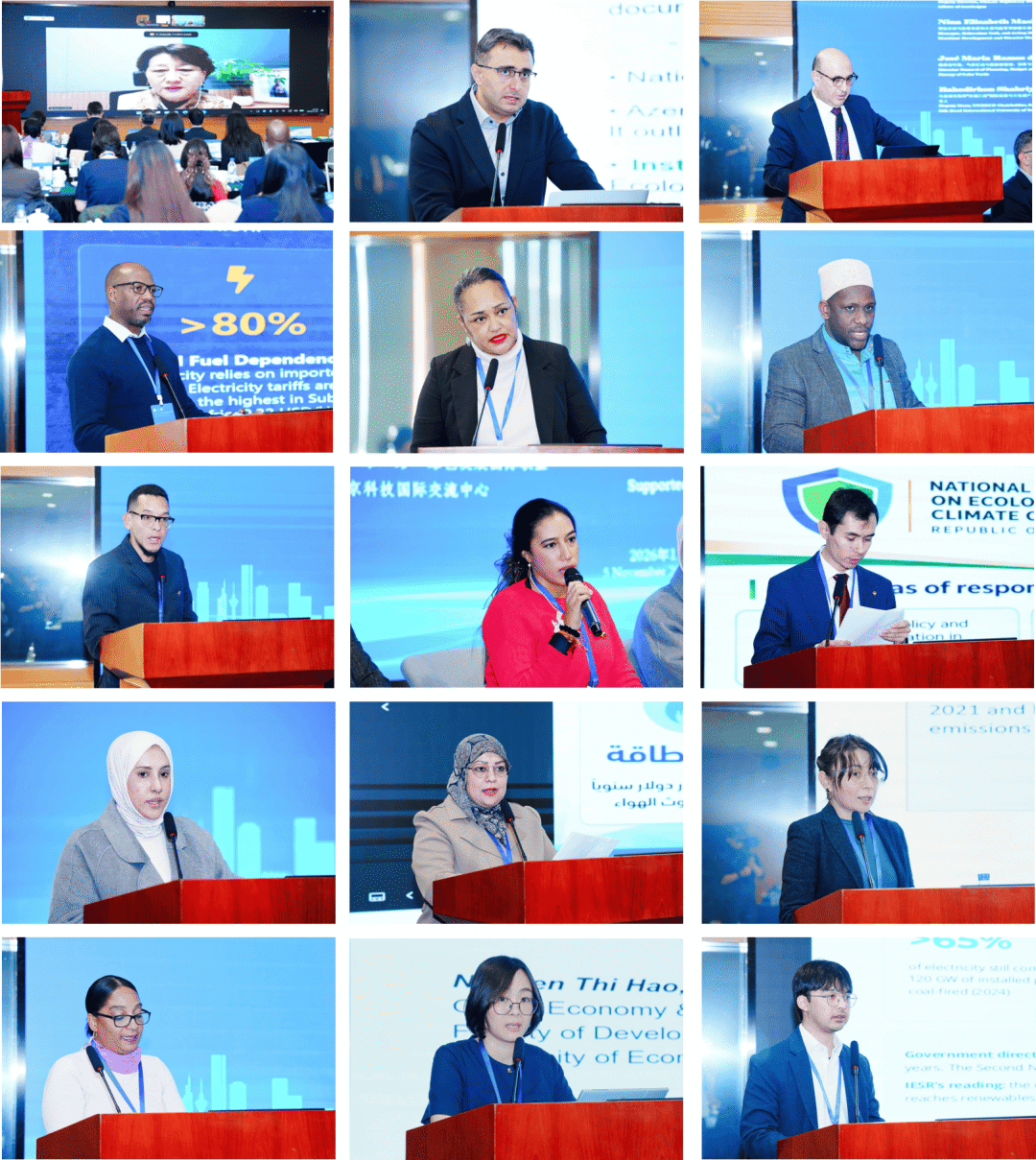
▲Figure 2 Representatives from Belt and Road partner countries sharing their green technology needs
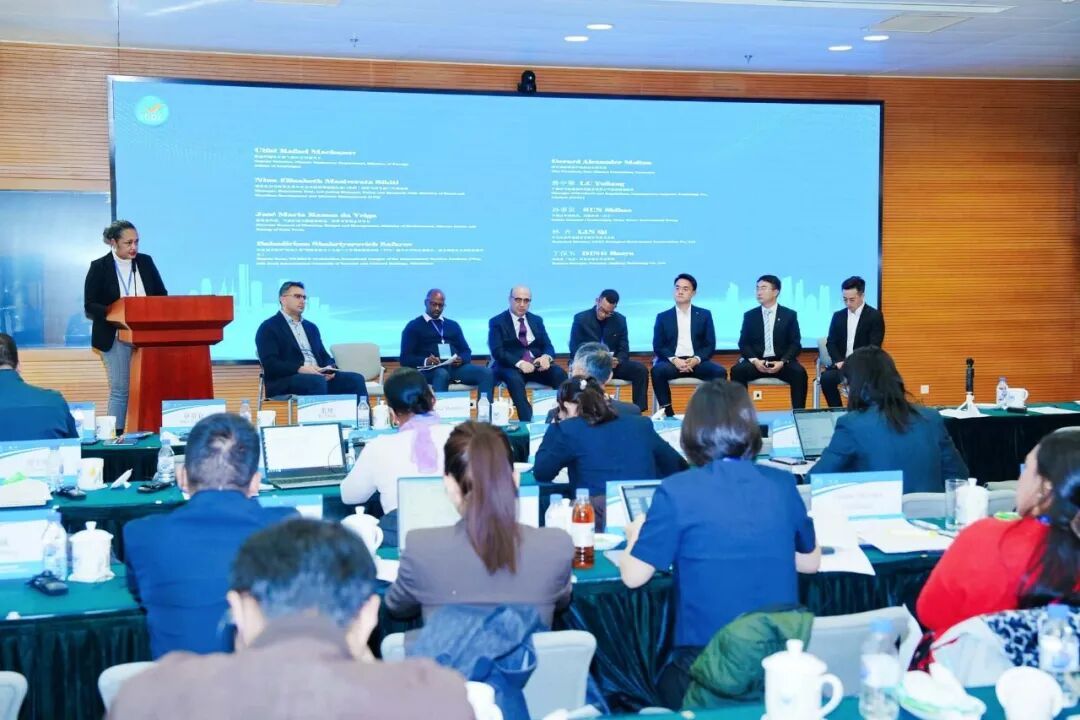
▲Figure 3 Roundtable 1:The Global South`s Technology Needs for the Green Transition and Solutions from China
Chinese representatives responded to these needs one by one. From the perspective of government agencies and research institutions, Hao Mingtu, Director of the Belt and Road Environmental Technology Exchange and Transfer Center (Shenzhen), proposed a cooperation mechanism for green technology exchange and transfer built around cities as the core unit, so that international cooperation shifts from scattered, one-off projects to systematic matchmaking in batches. Li Xinge, a researcher at the China Automotive Strategy and Policy Research Center, called for new energy vehicle exports to evolve from selling vehicles to exporting entire systems, and for partners to jointly build green transport demonstration projects.
From the financial sector, Ken Chiu, Head of Carbon and ESG Products at Hong Kong Exchanges and Clearing Limited (HKEX) and Member of GLEN, outlined how Hong Kong leverages its "super-connector" advantage through financial innovation, including supporting green tech companies with green equity financing, advancing cross-border carbon trading mechanism alignment, and achieving mutual recognition of green electricity certificates to broaden financing pathways for the green transition.
From the business community, Lu Yuliang, Manager of Standards and Regulations at Contemporary Amperex Technology Co., Limited (CATL), proposed a three-step approach to ensure that green products are usable, measurable and built to go the distance. Lin Qi, Technical Director of CCCC Ecological Environment Construction Co., Ltd., shared how the company uses ecological restoration to export standardised systems and offer Chinese solutions tailored to the green transition in the Global South. Sun Shihao, Senior Manager (Technology) at China Water Environment Group, presented technical solutions and cooperation models including decentralised wastewater treatment, on-site water reuse and public-private partnerships (PPPs). Li Quanyun, Senior Manager for Sustainability at Mengniu Group, explained how combating desertification through industry can deliver both ecological and economic gains. Feng Xincheng, General Manager of the Beijing Branch of Shenzhen Lions King Hi-Tech Co., Ltd., highlighted opportunities for cooperation in turning solid waste into resources and developing carbon assets. Zhan Kai, Senior Partner at E20 Environmental Platform, showcased smart solutions that use large AI models to upgrade environmental infrastructure. Cui Xiujia, General Manager of CEI Environmental Education, shared how digital and intelligent platforms are being used to build green capacity. Ding Baoyu, General Manager of Cohesion (Beijing) Co.,Ltd, introduced a "big cycle" solution for recovering valuable metals from industrial wastewater and reusing reclaimed water.
Representing international science and technology organisations, Bi Shuli, Assistant Secretary-General of the World Green Design Organization (WGDO), presented a systematic methodology for embedding green design across urban planning, industrial upgrading and the entire product life cycle.
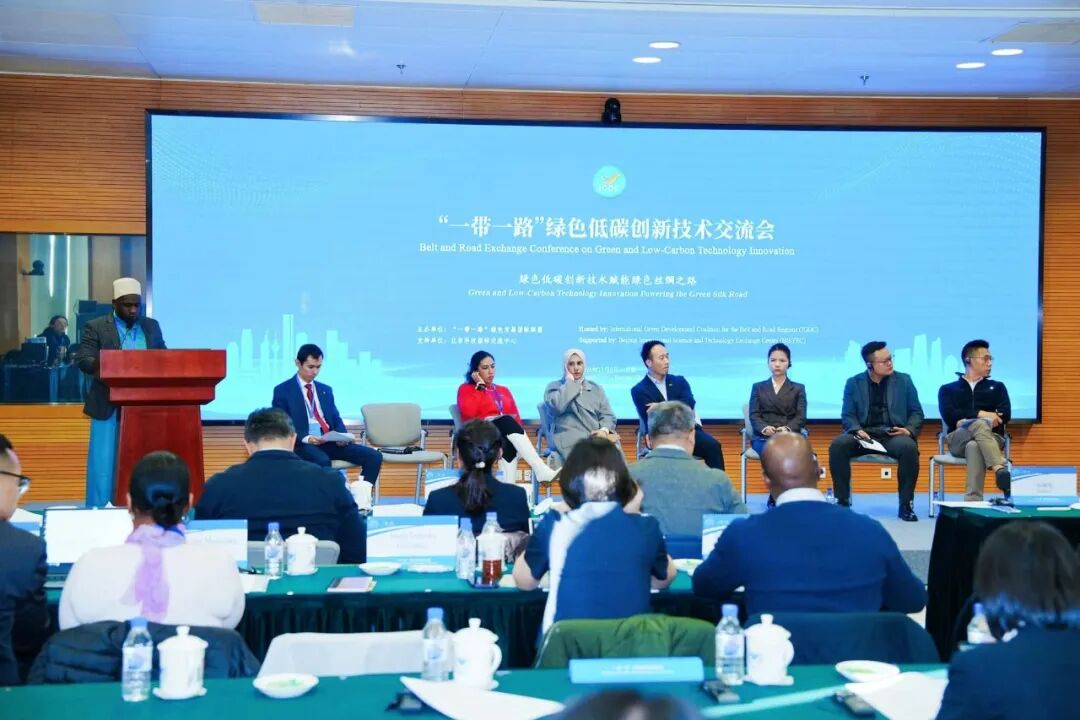
▲Figure 4 Roundtable 2: Green and Low-Carbon Innovation and Industrial Synergy
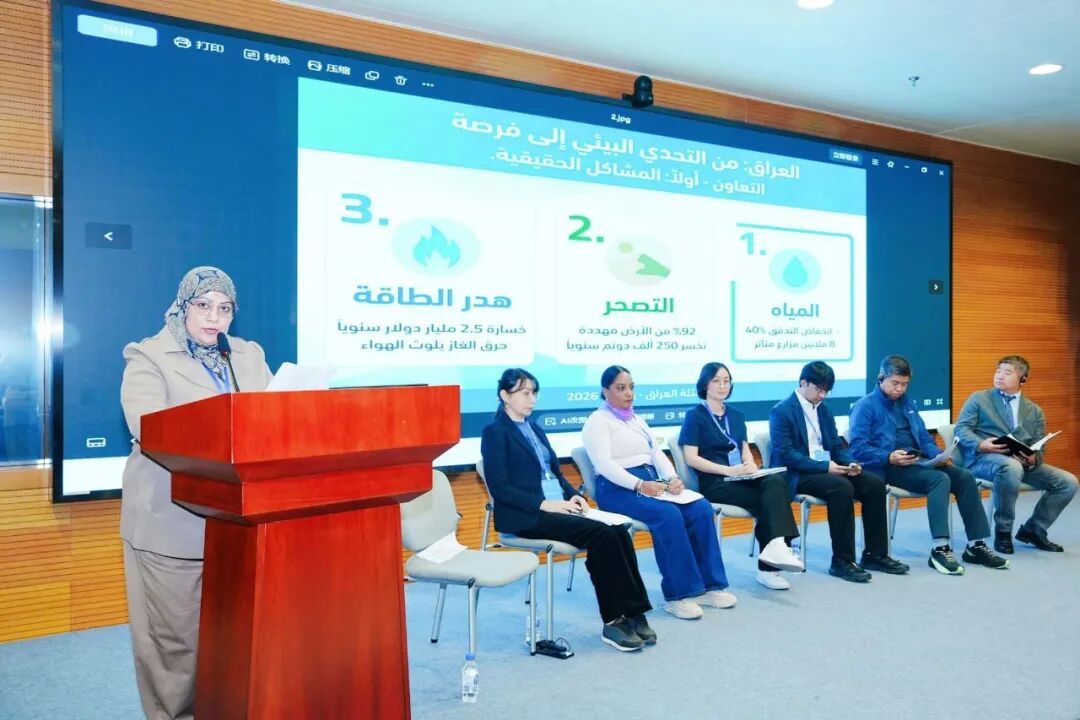
▲Figure 5 Roundtable 3: Green Finance and Digital Technologies Driving Green Development
Participants agreed that green and low-carbon innovation is driving green development and connecting countries towards a shared future. From ideas to solutions and from consensus to projects, the "technology engine" of the Green Silk Road is injecting fresh momentum into high-quality Belt and Road cooperation.
Copyright © 2020 BRI International Green Development Coalition. All rights reserved.
Address: No.5 Houyingfang Hutong, Xicheng District, Beijing 100035, China
Postcode: 100035
Fax: (86)10-82200539
E-mail: secretariat@brigc.net


