
Xinhua Silk Road, Antalya, Türkiye, November 13 (Reporter: Xu Wanhu)
On the afternoon of November 12 local time, Chinese and international guests from governments, financial institutions, research institutions, non-governmental organizations and the private sector gathered at the China Pavilion of the 31st session of the Conference of the Parties(COP31)to the United Nations Framework Convention on Climate Change in Antalya, Türkiye, for a side event themed “Delivering on Innovation Action to Jointly Build the Green Silk Road”, where they held in-depth discussions on partnership building, green technology innovation and local application.
The side event was jointly hosted by the International Green Development Coalition for the Belt and Road Regions(IGDC)and the Foreign Environmental Cooperation Center of the Ministry of Ecology and Environment. In his remarks, Liu Zhenmin, China’s Special Envoy for Climate Change, said that China has stayed committed to innovation-driven, green and low-carbon development, which has raised the level of its ecological civilization building and environmental governance, while providing a practical model for building a clean and beautiful world together. The Green Silk Road offers an important way to align the needs of all parties, bridge development gaps and safeguard a green future.
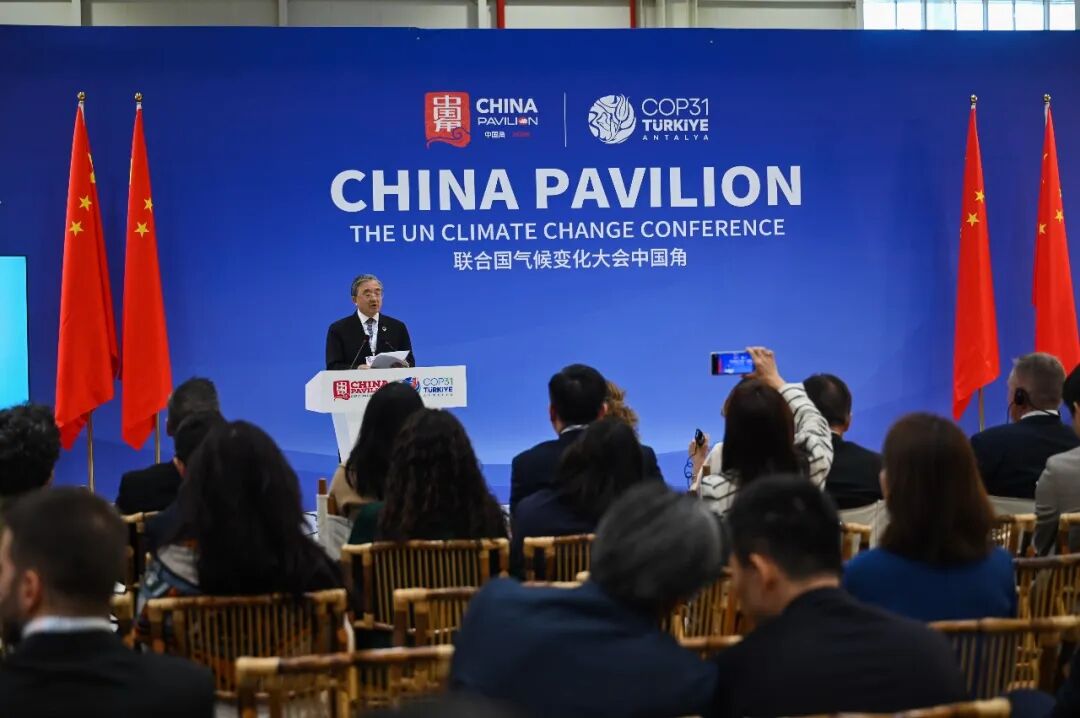
▲Liu Zhenmin, China’s Special Envoy for Climate Change, delivers remarks at the event. Photo by Liu Lei, Xinhua News Agency reporter
In his remarks, Zhao Yingmin, President of IGDC, said that China has developed a range of mature, replicable and modular green technologies in areas such as renewable energy, distributed water management, resource recovery from solid waste, photovoltaic-plus applications and the circular economy. For these technologies to benefit the world, the international community needs to strengthen exchanges and cooperation, share development experience, facilitate the flow of technology and local innovation, and jointly explore more inclusive, practical and sustainable pathways for cooperation.
Building a Network for Action to Match Green Technologies with the Needs of the Global South
“Our experience with the Green and Low-carbon Expert Network(GLEN)shows that countries of the Global South need integrated solutions that bring together technology, standards, finance and local capabilities, beyond individual pieces of equipment.” Zhao Yingmin said the next step would be to release a report on the technology needs of the Global South for green transition and promote joint research and development, demonstration projects and local application, so that innovations can move from laboratories into cities, industrial parks and communities.
IGDC has brought together more than 190 Chinese and international partners from nearly 50 countries and regions and built a framework for its work around the Belt and Road Green Innovation Conference as its core mechanism, with three pillars: the Green Investment and Finance Partnership(GIFP), the Green and Low-carbon Expert Network and the Belt and Road Big Data Service Platform on Ecological and Environmental Protection.
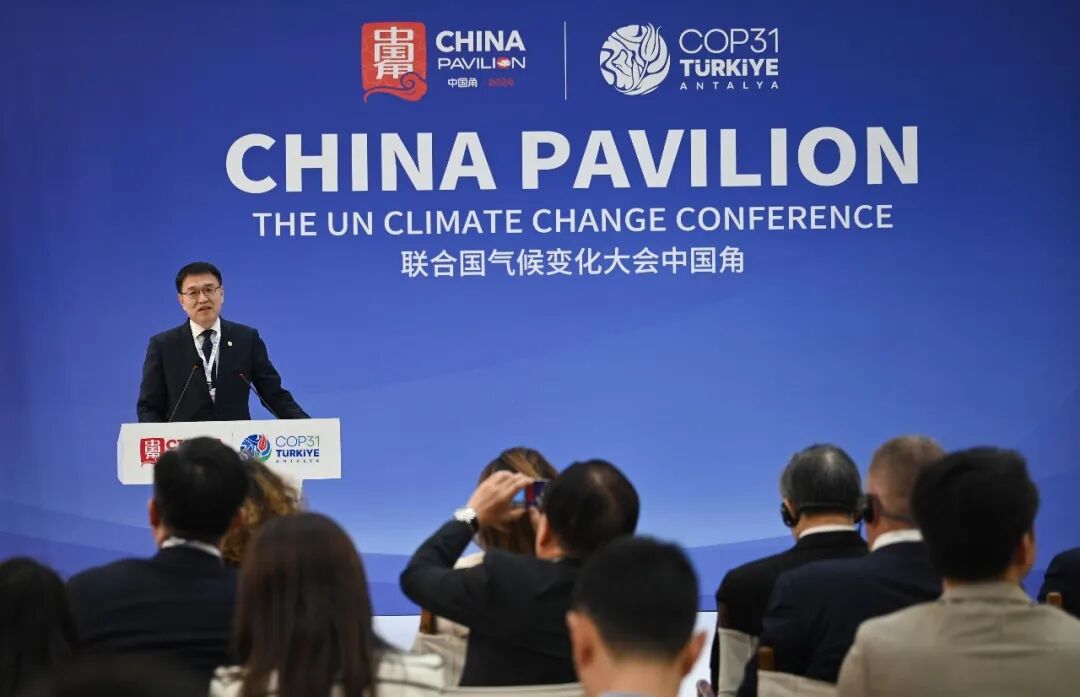
▲Zhao Yingmin, President of the IGDC, speaks at the event. Photo by Liu Lei, Xinhua News Agency reporter
Zhao Yingmin said IGDC is committed to moving South-South cooperation from “shared understanding” to “joint action” by making green technologies “affordable, effective in use and viable locally over the long term”, making green finance “accessible, well targeted and able to drive the transition”, and making capacity building “digital, inclusive and replicable”, following the principle of “teaching people to fish”, an empowerment-oriented approach rather than one-off support, to develop local green professionals and industries in Belt and Road partner countries.
Jorge Moreira da Silva, United Nations Under-Secretary-General and Executive Director of the United Nations Office for Project Services, said that addressing climate change calls for policy and financial support as well as stronger capacity to implement projects. He stressed that building sustainable and resilient infrastructure is vital to achieving climate goals and the Sustainable Development Goals, and that all parties should deepen cooperation to carry out practical projects in clean energy, power grids and energy storage.
During the thematic discussion on “Partnership Building”, Zhang Zhifeng, Director General of the Foreign Environmental Cooperation Center of the Ministry of Ecology and Environment and Vice President of IGDC, Yu Zhihong, President of China Sustainability Tribune, and other guests shared practical experience in building networks for action on green development, coordinating policies and connecting projects with funding.
Integrating Technology with Industry to Put Green Innovation into Practice Locally
Innovation in science and technology is a major driver of green transition. New technologies and applications are emerging in fields such as new energy, energy storage, green transport, the circular economy and artificial intelligence. As the digital economy grows rapidly, green computing power and green data centres are emerging as areas in which digitalization and green development can advance together.
Liu Zhenmin proposed that countries of the Global South strengthen joint research on green technologies, equipment and standards and support the practical application of green innovations to help develop local green industries and build a pool of skilled technical professionals.
Zhao Yingmin said that international cooperation on green technologies should give due attention both to technological innovation itself and to whether the technologies suit different countries and regions, and that sharing mature technologies, practical experience and solutions can help developing countries improve their ability to apply green technologies and innovate locally.
At the event, IGDC also joined the China Quality Certification Centre and other organizations in presenting outcomes of the initiation of the standard project “Technical Specification for Trusted Evaluation of Carbon Efficiency of Computing(CEOC)in Data Centers”.
During the thematic discussion on “Technology Innovation and Local Application”, representatives from the Hong Kong Quality Assurance Agency and Chinese companies including BYD, JinkoSolar, SUS Environment and Shenzhen Lions King Hi-Tech Co., Ltd shared case studies on local manufacturing of complete new energy vehicles, manufacturing of photovoltaic and wind power equipment, and resource recovery from solid waste, and described the results of applying Chinese green technologies in Belt and Road partner countries and regions and the role of related cooperation in developing local green industries.
Expanding Green Investment and Finance Channels to Effectively Connect Technologies and Projects with Financial Resources
Experts at the event said that Global South countries have considerable potential for green development and wide-ranging needs for cooperation in areas such as clean energy, power grid development, green transport, resource recycling and digital infrastructure. Advancing the green transition requires technological innovation and stronger cooperation on investment and finance so that funding and technology can be effectively matched to specific projects.
Liu Zhenmin proposed building a more open, transparent and inclusive system for green investment and finance and encouraging country platforms to connect and cooperate so that more capital flows to areas such as climate action, pollution control and ecological conservation.
During the side event, IGDC also signed a memorandum of understanding(MoU)with the Brazilian Development Bank(BNDES)on the China-Brazil country platform, aiming to advance green investment and finance projects through institutionalized cooperation.
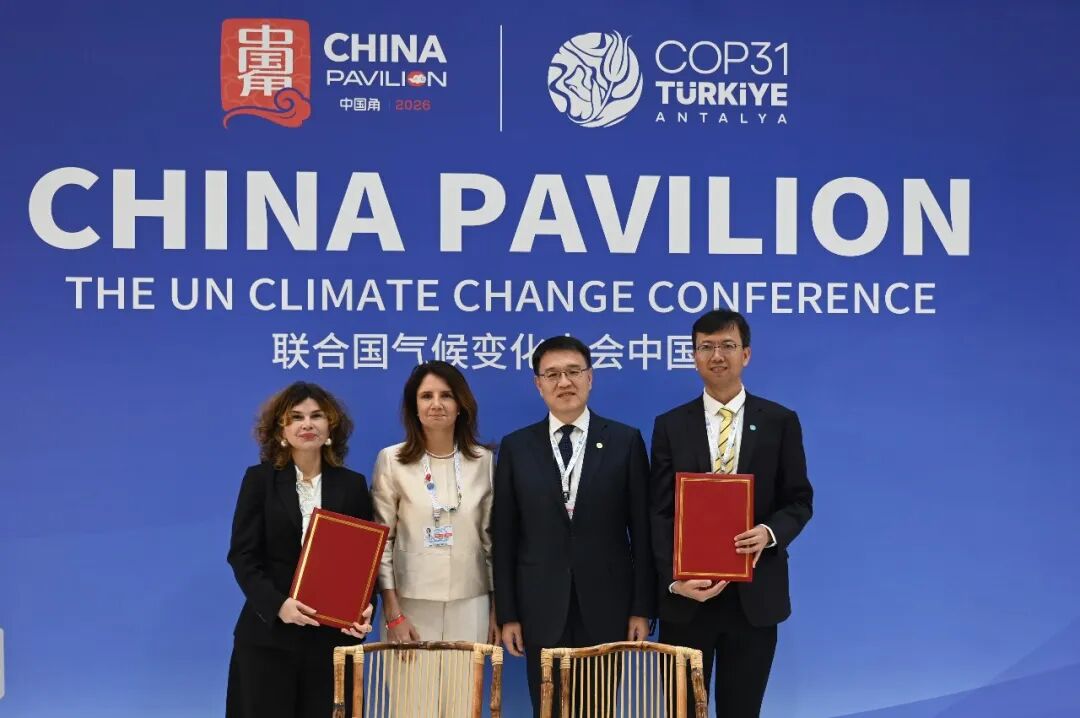
▲Signing of the MoU on the China-Brazil country platform. Photo by Liu Lei, Xinhua News Agency reporter
Ana Toni, State Secretary at Brazil’s Ministry of Environment and Climate Change and Chief Executive Officer of COP30, said Brazil and China cooperate closely on energy, green industries, transport and multilateral climate governance. She praised the contribution of China’s renewable energy and electric vehicle industries to the global green transition and said the two countries should further strengthen South-South cooperation, use cooperation platforms to share green technologies and development experience, and put more sustainable development projects into practice.
IGDC will prioritize the diffusion of green technologies in its next phase of work, according to the coalition. It will solicit technology needs from countries of the Global South and compile them into an annual list so that proven Chinese green technologies can be matched closely to local needs, and it will use annual meetings, thematic workshops and expert exchanges to connect technology, industry and finance, support technology demonstrations, capacity building and mutual recognition of standards, and shift cooperation from a “turnkey” model to “nurturing local ecosystems”.
Translated and edited by IGDC
Copyright © 2020 BRI International Green Development Coalition. All rights reserved.
Address: No.5 Houyingfang Hutong, Xicheng District, Beijing 100035, China
Postcode: 100035
Fax: (86)10-82200539
E-mail: secretariat@brigc.net


