
On 13 November, the Belt and Road Green Technology Innovation Exchange and Matchmaking Conference was held in Wuhan. Co-hosted by the International Green Development Coalition for the Belt and Road Regions(IGDC)and the Foreign Environmental Cooperation Center of the Ministry of Ecology and Environment(FECO/MEE), with support from the Wuhan Municipal Bureau of Ecology and Environment and Tanoto Foundation China, it was the latest in a series of matchmaking events under the Green and Low-carbon Expert Network(GLEN). Government officials and technical experts from 14 Belt and Road partner countries, including Chile, Cuba, Indonesia, Nigeria, Türkiye and Viet Nam, joined representatives of Chinese government departments, research institutions and businesses to discuss how the supply of green and low-carbon technologies can better meet demand.
From showcases of results to matchmaking sessions, participants kept returning to the same question: how can a green technology make its way from the laboratory to a project site in a partner country? The day’s two events offered some answers, covering what technologies are on offer, what partner countries need, and which solutions fit.
BRI Partner Countries Set Out Their Development Needs
At the matchmaking conference, representatives of BRI partner countries described the areas in which they are seeking cooperation on green and low-carbon development, drawing on their own national circumstances.
Temitope Moses Fatogun, Director for Planning, Research, and Policy Analysis at the Federal Ministry of Innovation, Science and Technology of Nigeria, presented a list of 19 priority technology areas, ranging from renewable energy manufacturing and assembly, battery storage, and smart grids and mini-grids to clean cooking and waste management. “The goal is not just to finance the transition, but to build Nigeria’s own capacity to design, deploy, operate and scale green technologies,” he said. He hoped that cooperation with Chinese companies would move beyond equipment supply towards technology partnerships and local value addition, and that Nigeria could receive support with project preparation, blended finance and MRV (measurement, reporting and verification) systems.
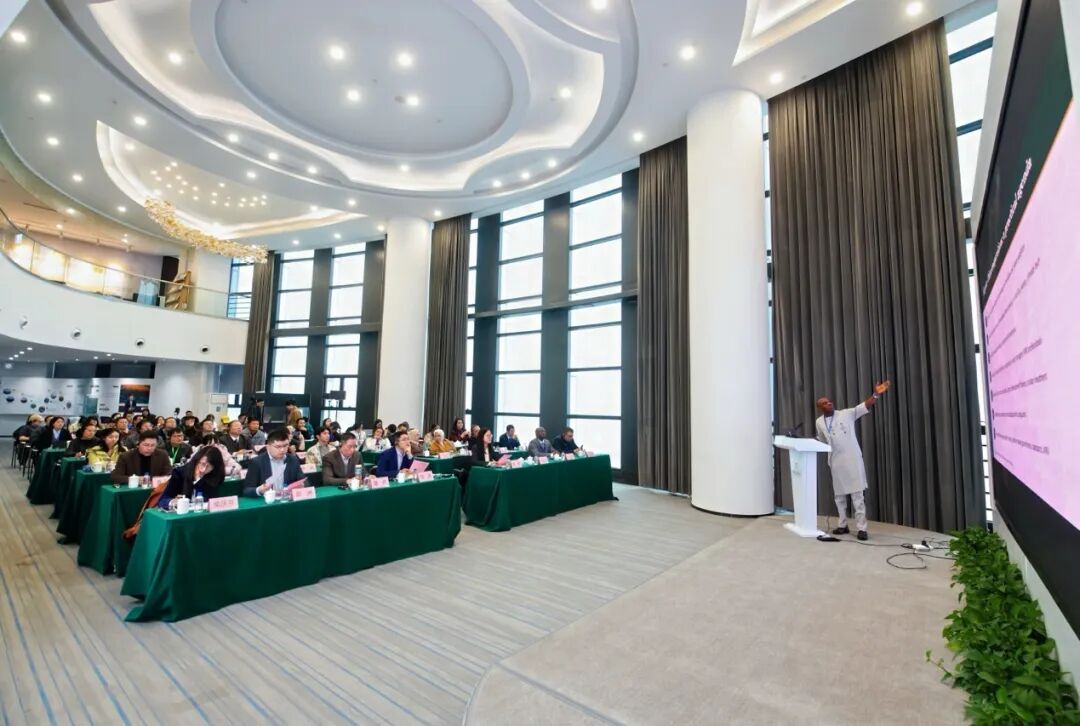
▲Figure 1 A session of the Belt and Road Green Technology Innovation Exchange and Matchmaking Conference
Komronbek Normurod ugli Khoshimov, Chief Specialist at the Project Office for Development and Implementation of Investment Projects in Ecology of Uzbekistan, said his country is focusing on ecological restoration in the Aral Sea region, tackling urban air pollution and dust, and developing a circular economy. This calls not only for technologies to combat desertification and for remote-sensing monitoring, but also for support with project development and financing. “China’s experience in combating desertification and applying remote sensing is particularly relevant to these tasks,” he stressed.
Taking textile waste recycling as an example, Mackarena Monserratt Calderon Angulo, Founder of NEO Circular Bag Design Agency in Chile, said that “the challenge lies not only in identifying environmental problems, but in turning them into measurable, financeable and circular solutions.”
Fatma Alshahri, Head of the Biology Laboratory Section at the Dhofar Office of the Directorate General of Health Services of Oman, outlined Oman’s cooperation needs in energy storage and power grids as it works towards net-zero emissions by 2050. Ülkü Türkmen, Expert at the Ministry of Treasury and Finance of Türkiye, said that as renewables make up a growing share of the country’s energy mix, its transmission network needs to be upgraded. Nguyen Thi Hao, Deputy Director for Green Economy and Innovation at the University of Economics and Business, Vietnam National University, Hanoi (VNU-UEB), said Viet Nam will need more than US$360 billion in climate-related investment by 2040, with power and low-carbon agriculture as priority areas. Aditia Rabbani Pramusakti, Climate Policy Analyst at the Institute for Essential Services Reform(IESR)in Indonesia, said the country has capacity gaps in verifying greenhouse gas emissions data and in climate finance, and is looking for technical cooperation to close them.
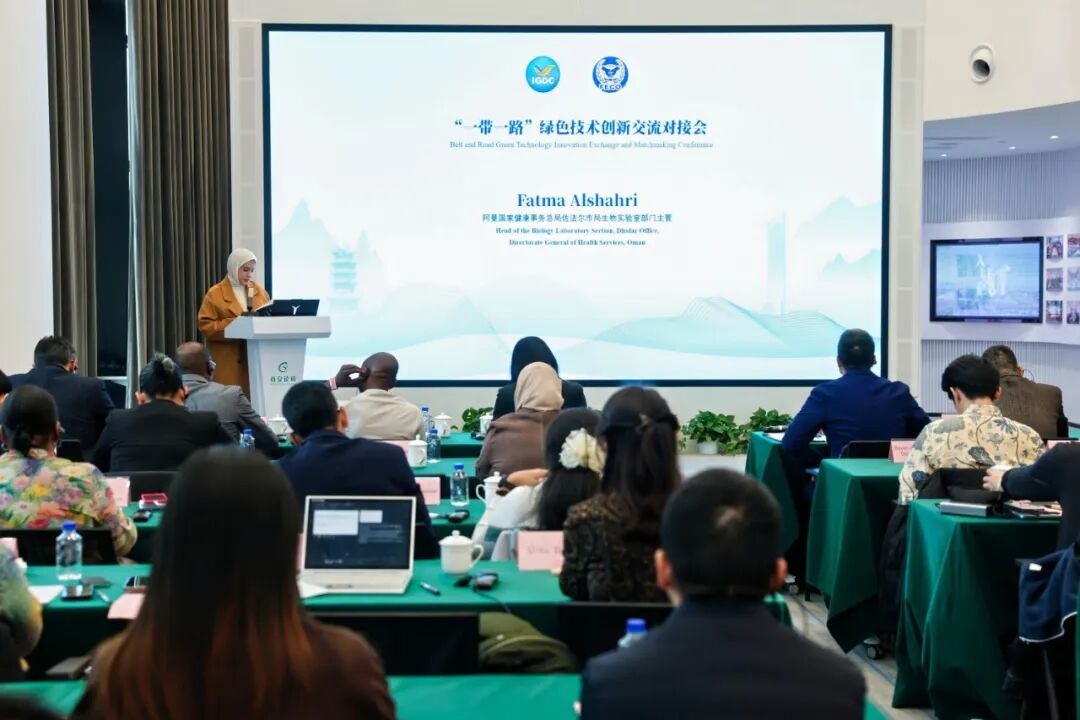
▲Figure 2 A session of the Belt and Road Green Technology Innovation Exchange and Matchmaking Conference
Chinese Solutions Matched to Local Needs
Chinese institutions and companies responded to these needs with concrete projects and real-world applications.
On energy and infrastructure, ZHANG Ke, Deputy Director of the Science, Technology and Digitalization Department at Wuhuan Engineering Co., Ltd., said that in the 11 synthetic ammonia and urea EPC projects the company has delivered in several countries, its high-efficiency, low-energy urea technology can cut capital expenditure by around 20%. PENG Zhou, Director of the Low-Carbon and Energy Conservation Research Division at the Environmental Engineering Design and Research Institute of China Railway Siyuan Survey and Design Group Co., Ltd., showed how low-carbon design can be built into major engineering projects. Examples included the Shanghai–Suzhou–Huzhou High-Speed Railway, whose route avoids more than 20 ecologically sensitive areas, and Shanghai Songjiang Station, which cuts carbon emissions by nearly 3,700 tonnes a year. CHAI Qingfen, Project Manager at the Energy Engineering Company of Central Southern China Electric Power Design Institute Co., Ltd. of China Power Engineering Consulting Group, reported that several sites of the energy storage project the company is building in Uzbekistan are already in operation, helping to regulate the local power grid.
On water treatment and livelihood improvment, QIAN Yiming, Overseas Marketing Specialist at Hubei Meichen Environmental Protection Incorporated Co., Ltd., presented a treatment solution for phosphorus-containing wastewater that recovers up to 75% of the water. The company’s hollow-fibre membrane modules, made by thermally induced phase separation(TIPS), use 30–40% less energy than comparable products. ZENG Wei, Professor at the Solar Energy Research Institute of Hubei University of Technology, shared experience from project cooperation in Africa, from a hybrid on-grid/off-grid solar-plus-storage power station for the Addis Ababa Environmental Protection Authority to an off-grid solar irrigation system in Eritrea.
A Network Linking Green Technology and Capacity Building
Two GLEN members offered ideas on technology matchmaking work, one from the perspective of investment and financing mechanisms, the other from that of green industrial and supply chains. Dimitri de Boer, Regional Director of Programmes for Asia at ClientEarth, recommended that information disclosure and community engagement begin early in solar, wind, public infrastructure, mining and waste-to-energy projects, to help companies reduce the risks of investing overseas. Christoph Nedopil, Professor at the Business School of the University of Queensland, noted that China is by far the largest source of clean technology imports and manufacturing investment for many countries, and suggested that international cooperation on green products and technologies be planned in line with each country’s industrial base and market size.
GLEN is one of the concrete measures to promote green development under the eight major steps China announced to support high-quality Belt and Road cooperation. As an important platform for exchanges on technological innovation, it brings together leading Chinese and international experts in fields related to green and low-carbon development, and offers targeted policy recommendations and technology solutions to address the specific challenges and practical needs that Global South countries face in their green and low-carbon development. Green technologies can only become practical, sustainable projects in partner countries when they are matched to real needs and backed by funding and capacity building. Regular technology exchanges and capacity-building programmes, and above all the exchange of ideas that GLEN brings, show how IGDC serves as a bridge and contributes its expertise to the green and low-carbon transition of the Global South.
Alongside the Exchange, the Wuhan Municipal Bureau of Ecology and Environment, the Wuhan Municipal Bureau of Science and Technology Innovation, the People’s Government of Wuchang District and the Administrative Committee of Wuhan East Lake High-Tech Development Zone jointly hosted the 2026 “Wuchuanghui” matchmaking event on green, low-carbon and environmental technologies and the commercialisation of sci-tech achievements in the Wuhan Metropolitan Area. Universities, research institutes and companies in Wuhan presented green technologies ready for industrial application, along with their use cases, which together formed a list of technologies available for matchmaking.
Translated and edited by IGDC
Copyright © 2020 BRI International Green Development Coalition. All rights reserved.
Address: No.5 Houyingfang Hutong, Xicheng District, Beijing 100035, China
Postcode: 100035
Fax: (86)10-82200539
E-mail: secretariat@brigc.net


